Serbia is one of the most underrated food countries in Europe — an intersection of Ottoman, Austro-Hungarian, and Mediterranean traditions, built around slow stewing, open-fire grilling, and home distilling. A full meal with drinks in Belgrade runs €12–20 per person, far better value than Western Europe. Below are six dishes you should actually try, plus where to eat them and what to bring home.
1. Rakija: Serbia’s national spirit
Nearly every Serbian family makes its own. The classic is šljivovica (plum brandy, 40–50% ABV), followed by quince, apricot, and honey varieties. How to drink it: a small pour (30 ml) before the meal, with a toast of “Živeli!” (jee-veh-lee). Do not drink it like beer, and never mix it with cola. Our half-day rakija tasting at four bars + a kafana folk-music evening includes 8–10 pours and a Mandarin-speaking driver-guide — the most efficient way in.
📷 Sumit Surai · CC BY-SA 4.0 · Wikimedia Commons
2. Ćevapi: the soul of Balkan grill
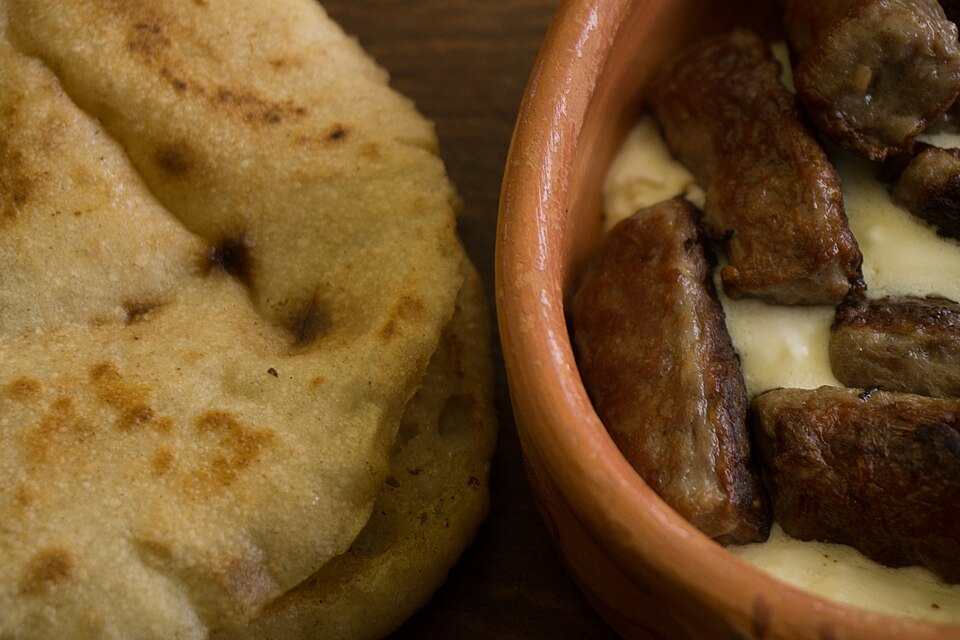
Five to ten small charcoal-grilled minced-meat sausages (a beef-and-lamb mix), served with lepinja flatbread, kajmak (clotted cream), and raw onion. A plate runs €8–12 and works as either a starter or a main. Don’t miss: Walter on Skadarlija (Sarajevo-style ćevapi), Ćevabdžinica Lešnik next to Loki Burger, and Toma Burek in New Belgrade.
3. Sarma: the Christmas main
Pickled cabbage leaves stuffed with a pork-and-beef mince and rice, slow-stewed for four hours. The classic winter holiday dish. A plate runs €6–9, served with kajmak and cornbread. The century-old kafanas Tri Šešira and Dva Jelena on Skadarlija make the most traditional version.
4. Burek: the king of breakfast
An Ottoman-inherited filo pastry, made in three main fillings: meat (meso), cheese (sir), and spinach (zelje). Eaten for breakfast with a glass of kefir. A piece costs €1.50–3. Pekara Trpković on Republic Square is widely considered Belgrade’s best.
5. Kajmak: the all-purpose accompaniment
An unfermented young clotted cream, richer than Italian mascarpone, and a natural pairing with ćevapi, bread, potatoes, or pancakes. The best kajmak comes from the Kraljevo and Užice highlands. A kilogram in the supermarket runs €8–15. If you take it home as a gift, keep it refrigerated and consume it within a few days.
6. Ajvar: a table essential
Roasted red peppers ground into a relish with garlic and olive oil. Most Serbian families make their own batch each autumn. A 250 g jar runs €3–5 and travels well as a gift (sealed jars clear customs without issue).
Where to eat in Belgrade
| Style | Recommended | Per person |
|---|---|---|
| Century-old kafana with live folk music | Tri Šešira / Dva Jelena / Šešir Moj on Skadarlija | €15–30 + folk-musician tip €2–5 |
| Local home-style cooking | Walter, Manufaktura | €10–18 |
| Big-portion grills | Loki, Toma Burek | €8–15 |
| Michelin-guide | Salon 1905, Iva New Balkan Cuisine | €50–80 (tasting menu) |
| Riverboat restaurants | Reka, Šaran (Zemun district) | €20–35 + fish by weight |
What to bring home
- Rakija: aged-barrel selections at €15–30 a bottle; BMK Slavonska is a well-known label
- Ajvar: 250 g glass jars at €3–5; Vegeta and Podravka are reliable major brands
- Negotinske kobasice (dry-cured sausage): roughly €15–25 each, sealed for travel
- Honey: Apicentar’s recommended multi-floral honey at €8–12 a jar
- Tito-era memorabilia: Tito T-shirts, red-star pins, replica red passports at the Belgrade airport duty-free, €5–25
A good first night: book the Rakija + Kafana half-day as your introduction, then explore the rest at your own pace.