If you’re going to Belgrade just to take photos, skip this piece. But if you want to understand why the city is full of Brutalist architecture, why older Serbs still tear up at the mention of Tito, and why the 1999 embassy bombing struck such a deep chord — you need 30 minutes to lay down a quick mental map of Yugoslav history.
Who was Tito (1892–1980)?
Born Josip Broz, the son of a Croatian-Slovenian peasant family. A corporal in the Austro-Hungarian army during World War I, he was captured by Russian forces and exposed to the Bolsheviks. He returned home, joined the party in secret, and in 1937 became General Secretary of the Communist Party of Yugoslavia. During World War II he led the Partisans against the Nazis — making Yugoslavia the only country in Europe to liberate itself without relying on the Soviet Red Army. He founded the Federal People’s Republic of Yugoslavia in 1945, renamed it the Socialist Federal Republic of Yugoslavia under the 1953 constitution, and made himself president for life.
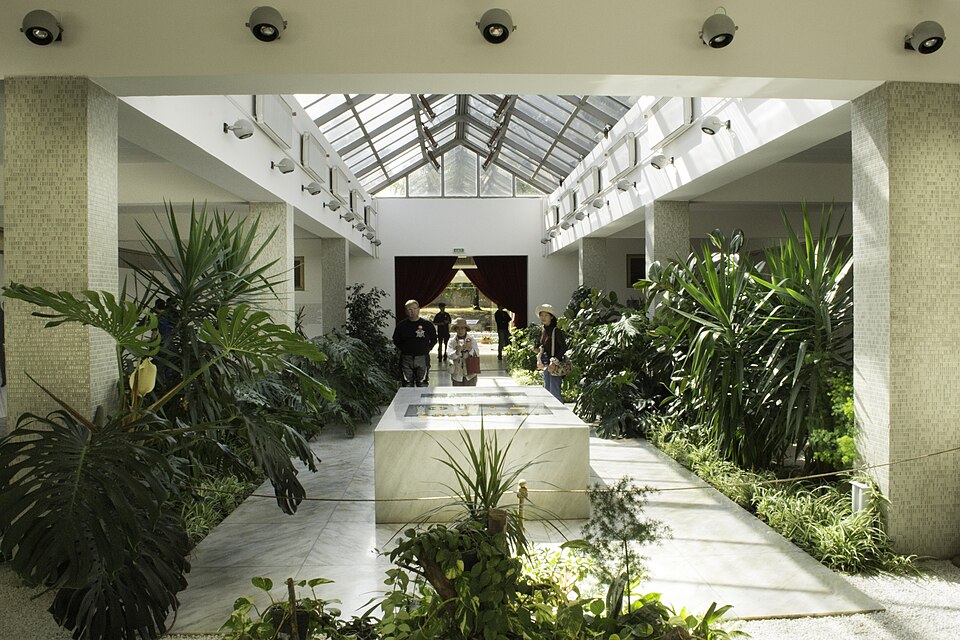
📷 Kenzavi (Cvetanović Igor) · CC BY-SA 3.0 · Wikimedia Commons
1948: the break with Stalin — Yugoslavia’s turning point
On 28 June 1948, Stalin had Yugoslavia expelled from the socialist bloc through the Communist Information Bureau (Cominform). The cause: Tito refused to place Yugoslav economic policy, foreign affairs, and the military entirely under Moscow’s control. Overnight, Yugoslavia became the “Eastern heretic” — Soviet aid stopped, Eastern Europe imposed an embargo, and 600,000 troops massed along the Romanian and Bulgarian borders.
Tito did not surrender, nor did he go over to the West. He chose a third path: workers’ self-management socialism. It was the world’s first non-Soviet model of socialism — factories run by workers’ councils, market mechanisms operating alongside state planning, and citizens free to travel abroad (a Yugoslav red passport was visa-free across most of the world during the Cold War).
The Non-Aligned Movement: Belgrade on the world stage
On 1 September 1961, Belgrade hosted the first summit of the Non-Aligned Movement. Tito, India’s Nehru, Egypt’s Nasser, Indonesia’s Sukarno, and Ghana’s Nkrumah were the five founders. The movement eventually drew in more than 120 developing countries and became the collective voice of the Third World during the Cold War.
Belgrade became a diplomatic stage in its own right. The Museum of 25 May still holds gifts presented to Tito by world leaders: ink paintings from Mao Zedong, porcelain from Zhou Enlai, a cigar box from Castro, a pyramid model from Nasser. Each is a physical record of that period. Our Tito-themed tour walks you through them one by one.
The China–Yugoslavia friendship (1955–1980)
Diplomatic relations were established in 1955. After the Sino-Soviet split of 1958, Tito was both publicly criticized in Beijing as a “revisionist” and privately studied as a model of non-alignment. In 1977 Tito visited China and was received by Mao. When Tito died in 1980, Deng Xiaoping personally traveled to Belgrade for the funeral. That funeral became known as the largest state funeral in history: delegations from 128 countries, four kings, six presidents, 22 prime ministers, 47 foreign ministers, four presidential candidates, and roughly 700,000 people in the streets. Leaders from both sides of the Cold War attended.
1991–2001: the tragedy of disintegration
Yugoslavia broke apart 11 years after Tito’s death. The causes were many: economic decline, suppressed ethnic tensions resurfacing, outside pressures, opportunistic politicians. Slovenia and Croatia declared independence in 1991, Bosnia in 1992 followed by the 1,425-day siege of Sarajevo, the 1995 Srebrenica massacre, the 1999 Kosovo war and the 78-day NATO campaign, the dissolution of the name “Yugoslavia” in 2003, Montenegrin independence in 2006, and Kosovo’s declaration of independence in 2008.
You can experience this chapter in person on the Sarajevo siege sites + Tunnel of Hope half-day with Mandarin guide.
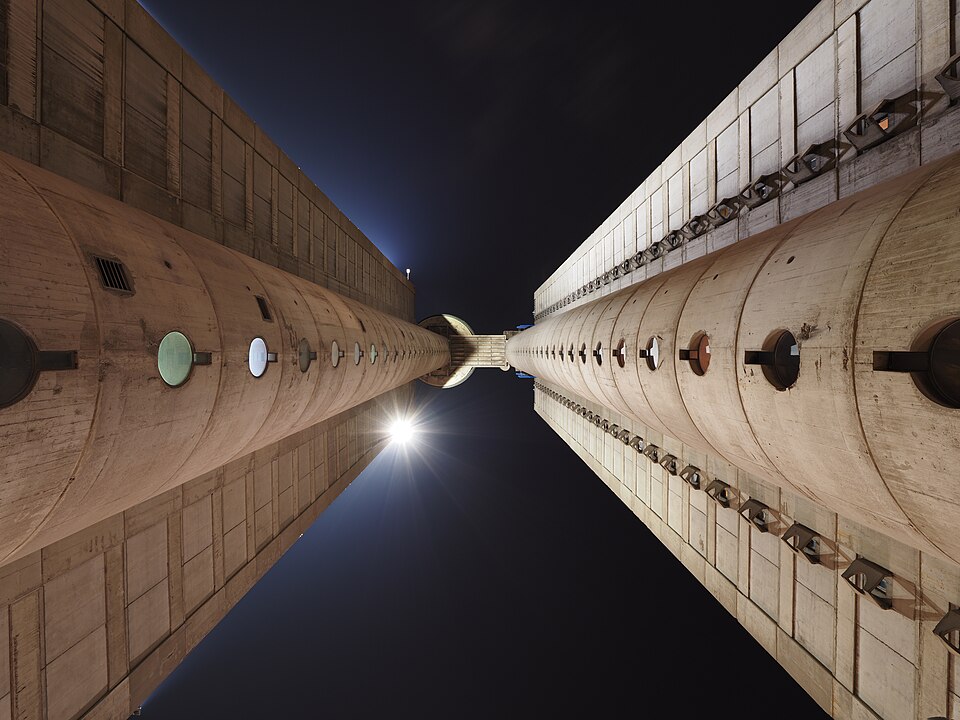
📷 Petar Milošević · CC BY-SA 4.0 · Wikimedia Commons
How does Belgrade view Tito today?
The answer is not a simple love or hate. Most Serbs over 50 look back on the Tito era with nostalgia — it was the high-water mark of Yugoslav economy, culture, and international standing. Younger Serbs are more divided. But the House of Flowers still receives roughly 120,000 visitors a year, and every 25 May (Tito’s birthday) still draws gatherings of nostalgic visitors from across the former Yugoslavia.
A recommended visit sequence for travelers
- House of Flowers + Museum of 25 May (half day, essential) — includes the Mao gifts hall, a natural draw for Chinese visitors
- New Belgrade Brutalism circuit (half day) — Genex Tower, the SIV building, and the visual legacy of the Tito era
- Monument to the Unknown Hero on Mount Avala (30 minutes) — a national monument designed under Tito
- Blue Train Belgrade–Užice 2-day in-depth — ride Tito’s presidential train at a slow pace through the Balkan forests
You can book any of these on their own or string them together. Our 4-hour Tito-themed tour is the entry-level option.