The 44-month siege of Sarajevo (1992–1996) was the longest siege of a capital city in modern warfare. For its duration, 350,000 civilians inside Sarajevo were completely cut off by Bosnian Serb forces — water, electricity, food, weapons and the evacuation of the wounded all severed. The Tunnel of Hope (Bosnian: Tunel spasa, literally “tunnel of salvation”) was the city's most critical lifeline: an 840 m underground passage hand-dug by the Bosnian army in 1993, running beneath the Sarajevo airport runway and the Serb siege lines, connecting the Dobrinja district inside the city with the village of Butmir outside.
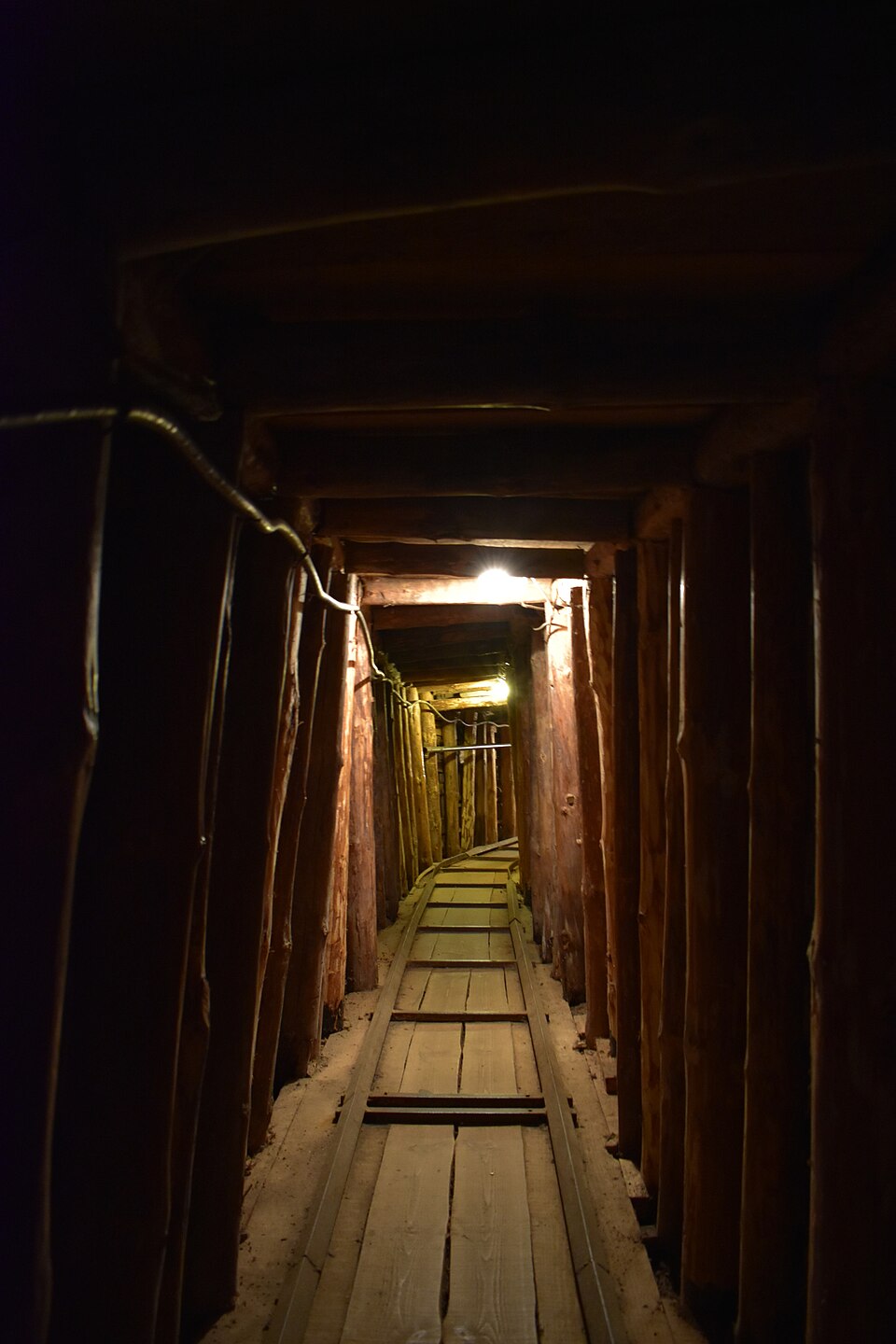
📷 Cover photo: Justin W Flory · CC BY-SA 3.0 · Wikimedia Commons
What it is: an 840 m hand-dug lifeline
The Tunnel of Hope is roughly 840 m in total length (160 m of approach trench on the Dobrinja side, 340 m of approach trench on the Butmir side, and 340 m of true tunnel under the airport runway). It is 1.6 m high and 1 m wide, only wide enough for foot traffic and small narrow-gauge carts. Construction began on 1 March 1993 under the Bosnian army codename “Objekt BD”, dug by hand from both ends with shovels and pickaxes; some 1,200 m³ of soil was hauled out by handcart. The two ends met in the middle on 30 June 1993, and the tunnel opened on 1 July 1993.
During the siege the tunnel carried, on a daily basis:
- Small arms and ammunition
- Fuel (diesel and petrol drums)
- Food (flour and tinned meat)
- Medical supplies
- The evacuation of the wounded
- Government and military officials (including multiple secret crossings by Bosnian president Alija Izetbegović)
It remained in operation until the Dayton Accords ended the siege in December 1995. Without the tunnel, Sarajevo could well have fallen between 1993 and 1994 from sheer attrition of supplies.
Background: 44 months under siege
The siege of Sarajevo, which began on 5 April 1992, was the central battlefield of the Bosnian War (1992–1995). Republika Srpska forces shelled the city from the surrounding hills; on average more than 300 shells fell on Sarajevo each day, with a daily peak of 3,777 on 22 July 1993.
An estimated 13,952 people died during the siege, including 5,434 civilians. The Sarajevo Roses — mortar craters in the city's pavements filled in with red resin after the war — remain as memorials, with around 200 still scattered through the city centre today.
Location, tickets, hours
- Address: Tuneli 1, Ilidža 71210, Sarajevo (south of the airport in the village of Butmir, the former Kolar family house)
- Hours: 09:00–17:00 daily (extended to 19:00 in summer)
- Tickets: 10 KM (~€5); English- and Mandarin-language guiding is included (meet at the tunnel entrance)
- Getting there:
- Taxi: about 25 minutes from Baščaršija old town in the centre, €10–15
- Bus: route 32 to the Ilidža terminus, then a 5-minute taxi
- Guided tour: BALKAN CHINA Siege sites + Tunnel of Hope half-day Mandarin tour with car transfers, €70/pax
- Booking: in high season (May–September), book one day ahead to avoid capacity limits.
Inside the museum: what to see
The museum occupies the former Kolar family home and the tunnel entrance in the back yard. Two generations of the Kolar family still own and run the museum. Sections include:
- Documentary screening — an 18-minute film with siege-era footage (some scenes are graphic)
- Wartime objects — weapons, Bosnian army uniforms, field telephones, ration cans, letters and personal photos
- Civilian life under siege — how Sarajevo's residents endured 44 months without water or electricity
- Walkable tunnel section — about 20 m of the original tunnel are preserved and open to walk through. It is extremely narrow and low; not advisable for anyone with claustrophobia.
- Outer yard — the original tunnel entrance, with war memorial inscriptions
Best time to visit
- 6 April each year: anniversary of the start of the siege. The Sarajevo city government holds memorial ceremonies.
- 1 July each year: anniversary of the tunnel's opening. The Kolar family hosts a small commemoration.
- Other days: 09:00–11:00 in the morning is best — good light, fewer visitors.
- Avoid: weekend afternoons 13:00–15:00 in high season, when European and American tour groups peak.
Additional notes for Mandarin-speaking visitors
Pre-visit context — watching the BBC documentary Sarajevo (1995), or the 2008 American film Shot Through the Heart or The Hunting Party, will deepen the on-site experience considerably.
Etiquette — siege survivors still run businesses across Sarajevo. When discussing the siege, use the neutral terms “siege” or “opsada” (Bosnian/Serbian) and avoid politically loaded language.
Travelling with children — recommended for ages 14 and up. Some documentary footage depicts war trauma and is not suitable for young children.
Why a guided tour adds value — the Tunnel of Hope on its own takes about an hour. To grasp the full siege history, a Mandarin-language guided tour is well worth booking. Our Siege sites + Tunnel of Hope half-day Mandarin tour includes Sniper Alley, Markale market, the Holiday Inn and the Trebević bobsleigh track, €70/pax.